Skip to content
Alpha
  • Models
  • Rankings
  • Ori
Talk to sales

Footer

OpenRouterOpenRouter
© 2026 OpenRouter, Inc

Product

  • Chat
  • Ori
  • Labs
  • Pricing
  • Business
  • Enterprise

Explore

  • Rankings
  • Models
  • Apps
  • Providers
  • Benchmarks
  • Tools
  • Discover
  • Works With OR

Company

  • About
  • Blog
  • Customers
  • Careers
    Hiring
  • Privacy
  • Terms of Service
  • Trust Center
  • Support
  • Data
  • Brand

Developer

  • Documentation
  • API Reference
  • Developer Platform
  • Status
  • AI Site Map

Connect

  • Discord
  • GitHub
  • LinkedIn
  • X
  • YouTube
Favicon for minimax

MiniMax: MiniMax H3 Image Highspeed

minimax/minimax-h3-image-highspeed

BenchmarksCompare

MiniMax H3 Image Highspeed is the faster version of MiniMax's H3 Image model. It takes the same inputs and limits as MiniMax H3 Image: it creates images from text prompts and edits or composes images from 1 to 16 reference images, with output up to 20 megapixels and aspect ratios from 1:3 to 3:1.

Modalities
In / out price
$3 / $7.60per 1M
Context
4K
Released
Nov 11, 2026
BenchmarksCompare
PlaygroundBenchmarksProvidersPricingPerformanceUptimeAppsActivityFAQExplore

Example outputs summary for MiniMax: MiniMax H3 Image Highspeed

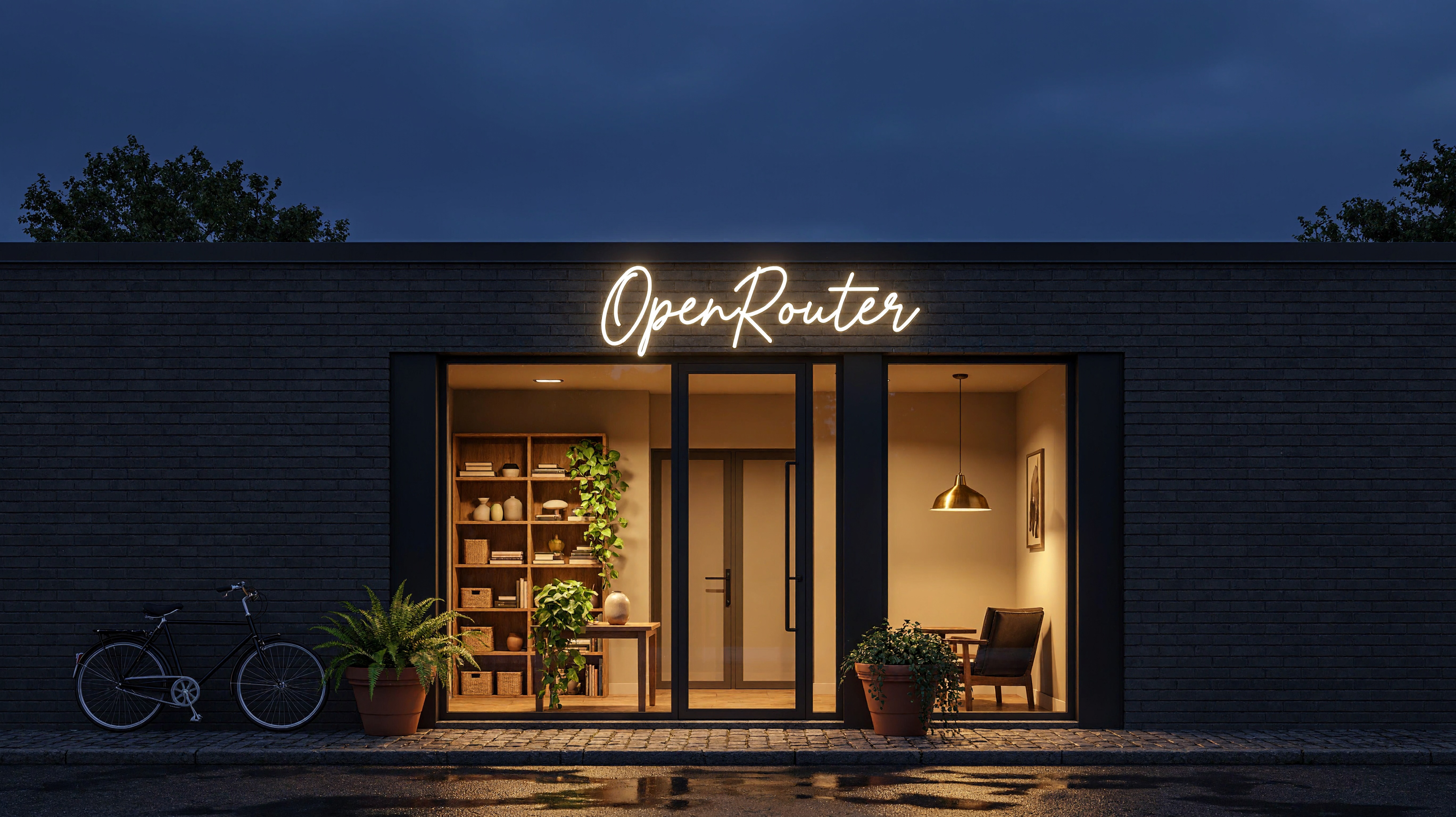
  • Text to Image: Editorial architectural photograph of a contemporary neighborhood storefront at blue hour, glowing warmly against the dusk. Above the entrance, a warm-white neon sign in flowing hand-bent cursive reads exactly "OpenRouter", the only text in the scene. Large windows reveal a cozy, lived-in interior: wood shelves styled with books and ceramics, lush trailing plants, and soft pendant lighting. Potted plants and a bicycle rest by the entrance, and golden light spills across the wet pavement in gentle reflections. Straight-on composition, realistic materials, quiet street with no people. — generated with MiniMax: MiniMax H3 Image Highspeed

Playground

Benchmarks

Scores on standardized evaluations and this model’s own outputs on shared benchmark prompts. Higher percentages are better — and each rank shows where this model lands among the models evaluated on that source.

Benchmark outputs summary for MiniMax: MiniMax H3 Image Highspeed

  • Full wine glass: A wine glass filled to the brim with white wine, the surface level with the rim of the glass, standing upright on a plain wooden table. Straight-on eye-level shot, glass upright and not tilted, no other objects in the frame.
  • Closed umbrellas: Wide street-level photograph of about twelve people crossing a city street in heavy rain. Every person is carrying a closed, furled umbrella held down at their side. Not a single umbrella is open. Each umbrella is clearly visible. They are all getting soaked. No other people in the frame.
  • Three fingers: Close straight-on photograph of an open right hand raised palm towards the camera, with exactly three fingers extended straight up and the other two folded down into the palm. Plain background, nothing else in the frame.
  • Cards & dice: Exactly four playing cards face up in a single straight row on a polished marble counter, evenly spaced, all the same size, showing the seven of hearts, the eight of spades, the nine of diamonds and the ten of clubs from left to right. No other objects in the frame. Straight-on eye-level shot, soft even light.
  • Long exact string: A white A4 poster on a brick wall reading exactly "SPRING CLEARANCE - EVERYTHING 40% OFF - SATURDAY 14 JUNE, 9AM TO 6PM". No other text in the frame.
  • Multiple languages: Straight-on photograph of a white overhead directional sign in an international airport terminal, with a black arrow pointing right at the left end. The sign carries the same word in four scripts on four stacked lines, in this order from top to bottom: "DEPARTURES", then the Japanese 出発, then the Korean 출발, then the Arabic المغادرة. Clean sans-serif lettering, sharp focus, no other text anywhere in the frame.
  • Occlusion: Straight-on eye-level photograph of a plain wooden desk. On the left, a closed hardcover book with a dark red cover stands upright, its front cover facing the camera. A blue ceramic mug stands on the desk to the right of the book and clearly further back, about 20 cm behind it, positioned so that the right edge of the book overlaps and hides the left third of the mug. The mug's handle points to the right and the whole rim of the mug is visible. Bare desk surface is visible between the book and the mug. Nothing else on the desk. Plain wall behind, soft even light.
  • Mirror: Straight-on eye-level photograph of a bathroom vanity. A large rectangular mirror covers the wall behind the counter and its bottom edge meets the countertop, so both the objects and their reflections are visible. On the counter, a tall red toothbrush cup on the left and a tall green glass bottle on the right, both roughly 20 cm tall and well apart from each other. The mirror reflects the counter and the objects on it accurately. Nothing else in the frame.
  • Plain zebra: Photograph of a zebra standing side-on in short grass. Its coat is a uniform solid grey with no stripes, no bands and no markings of any kind anywhere on its body. The whole animal is visible. Sharp focus.
  • Times Square: Wide street-level photograph of Times Square in New York at night, wet asphalt reflecting the lights. Every billboard, screen, storefront window, awning, taxi door and road marking is completely blank — lit with plain colour fields and soft gradients only. No letters, no words, no numbers, no logos, no lettering of any kind anywhere in the frame. Sharp focus, straight-on shot.
  • Minimal diff: From the reference photo, change only the sign text to "ROUTE 7 ESPRESSO - OPEN TILL 8". Keep the sign, wall, lighting and framing identical.
  • Object removal: Remove only the second cup from the left in the reference photo. Leave the other four cups exactly as they are, in the same positions, and leave the shelf, towel, wall, plant and lighting untouched.
  • Person removal: In the reference photo, remove only the person in the yellow coat. Their shadow on the pavement and their reflection in the shop window must be removed as well. Reconstruct the pavement and the window glass behind them. The person in the red coat and the person in the green coat must stay completely unchanged, including their own shadows and their own reflections. Change nothing else in the frame.
  • Product placement: Product photograph of the ceramic mug from the reference image, standing upright on a café table. Show the same side of the mug, from the same side-on eye-level angle as the reference, with the handle on the right. The shape, proportions, colours, moulded relief and every painted detail must match the reference exactly. Only the setting and lighting change: soft daylight in a café interior, shallow depth of field.
  • Four references: Place the person from the portrait reference at the desk in the scene reference, wearing the rust orange canvas jacket from its reference and holding the navy blue travel mug from its reference in one hand. Keep the face, the jacket and the mug exactly as they appear in the references — same colours, same details, same proportions. Do not change the room.
  • Portraits: Studio headshot of a woman in a charcoal blazer against a mid-grey seamless backdrop, lit by a large softbox slightly above and to the left with a soft fill from the right, catchlights in both eyes. An 85mm look with shallow depth of field, skin texture and flyaway hairs kept rather than smoothed.
  • People in scenes: Photograph of four cooks working the pass in a restaurant kitchen at service, plating three dishes at once, several hands in frame and some of them overlapping. One cook partly hidden behind another, steam rising into hard overhead light, each face clearly a different person.
  • Animals: Photograph of a tabby cat asleep on a sunlit windowsill, fur lit from behind so the individual hairs glow at the edges, one ear turned toward the camera. Shallow depth of field, a houseplant soft in the background, quiet morning light.
  • Landscape and nature: Photograph of an old-growth temperate rainforest after rain, moss on every trunk and fallen log, ferns dense across the floor, thin fog between the far trees. Overcast light with no direct sun, everything from the nearest fern to the last trunk in focus.

Providers

This model is hosted by one provider. OpenRouter forwards every request to it directly — no routing decisions to make.

Pricing

The average price customers actually pay for this model, next to the prices providers post. Caching and discounts mean the price actually paid is often well below the listed one.

Performance

Latency is how long it takes to generate and return the image (lower is better).

Uptime

Uptime is the percentage of the past 3 days that at least one provider was responding to requests. Availability is the percentage of time that inference was successfully served. OpenRouter continuously monitors and uses the next-best provider when one returns an error.

Apps

Public apps that send the most traffic to this model. Good signal for what real production workloads look like — and a hint at which use cases this model is best suited for.

Activity

Token volume and request traffic to this model over time.

API

Drop-in code to call this model. OpenRouter's API is OpenAI-compatible — most SDKs work by just swapping the base URL. The only thing that changes between models is the model slug below.

Not currently available through EU in-region routing. In-region routing docs

Explore more models

AI Models with Vision: Multimodal LLMs for Image UnderstandingCollectionImage Generation ModelsCollectionImage Model RankingsRanking
End-to-end latency
$2.30$3.00$7.6014.07s
100.00%
ProviderText / Image input /M
  • Favicon for Minimax
    Text $2.30 / Image input $3.00
    14.07s latency100.00% uptime
End-to-end latency
14.07s

P50, best provider

Uptime (3d)The model was reachable. Request routed to a provider.
100.00%
Availability (3d)The model returned inference from any provider. Errors and empty responses count against it.
99.83%

Availability over the last 3 days

Last 72 hours
Availability 99.83%
3 Days Ago2 Days AgoYesterdayNow

Availability over the last 24 hours

OpenRouter Availability
99.86%

When an error occurs in an upstream provider, we can recover by routing to another healthy provider, if your request filters allow it. You can access per-provider uptime data programmatically through the Endpoints API. Learn more about our load balancing and provider routing options.

1.
Favicon for https://metadataone.com/
MetadataONE Creatives
new
3.61Mtokens
2.
Favicon for https://chatboxai.app/
Chatbox AI
On-device AI copilot
301Ktokens
3.
Favicon for https://sillytavern.app/
SillyTavern
SillyTavern is the LLM frontend for power users, a chat interface that connects to any model and gives deep control through character creation, roleplay, and prompt customization.
149Ktokens
4.
Favicon for https://image.foss.gr/
image.foss.gr
new
148Ktokens
5.
Favicon for https://1ai.ir/
1ai
new
147Ktokens
Rest of OpenRouter
46.4M
Top 5 Apps
2.39M

Frequently asked questions

MiniMax H3 Image Highspeed is the faster version of MiniMax's H3 Image model. It takes the same inputs and limits as MiniMax H3 Image: it creates images from text prompts and edits or composes images from 1 to 16 reference images, with output up to 20 megapixels and aspect ratios from 1:3 to 3:1.

MiniMax H3 Image Highspeed costs $2.30/M tokens for Text Input, $3.00/M tokens for Image Input, and $7.60/M tokens for Image Output.

MiniMax H3 Image Highspeed renders at 1K, 2K, and 4K, supports the 1:1, 1:2, 1:3, 2:1, 2:3, 3:1 and 17 more aspect ratios, returns JPEG, PNG, and WEBP images, and can generate up to 10 images per request.

MiniMax H3 Image Highspeed accepts text and images as input and returns images. Up to 16 reference images can be attached to one request for image editing.

MiniMax H3 Image Highspeed is served by 1 provider on OpenRouter: MiniMax.

MiniMax H3 Image is another image model from MiniMax.

MiniMax H3 Image Highspeed was released on November 11, 2026.

More models from MiniMax

MiniMax H3 Image

MiniMax H3 Image is MiniMax's image generation and editing model. It creates images from text prompts and edits or composes images from 1 to 16 reference images, with output up to 20 megapixels and aspect ratios from 1:3 to 3:1.

Image$1.50 / $3.80
MiniMax M3.1 Flash

MiniMax-M3.1-Flash is a multimodal model from MiniMax. Compared with M3, it delivers significant improvements across multiple benchmarks, particularly in complex agentic tasks, coding, and cybersecurity. It is built for complex, multi-step co-work automation, understanding real codebases, fixing bugs, and building features, and visual understanding and creation, including frontend and presentation creation. It is an open-weight mixture-of-experts model with 23B active / 428B total parameters.

Text1.0M context$0.075 / $0.30
H3 Max

MiniMax H3 Max is a video-generation model from MiniMax, jointly released with fal.ai. Derived through additional training from MiniMax H3, it is designed for faster text-to-video and image-to-video generation with controlled first-frame or last-frame keyframes.

Videofrom $0.05/second
H3

MiniMax H3 is a lightweight, open-weights video generation model from MiniMax. It is designed for precise multimodal editing and controlled content generation, including instruction-guided edits, text and brand rendering, and video-to-video motion transfer.

The model is suited for commercial creative workflows across advertising, e-commerce, gaming, and interface design, with native audiovisual output for reference-driven generation.

Videofrom $0.13/second
Speech 2.8 HD

MiniMax Speech 2.8 HD is a text-to-speech model from MiniMax. It is suited for applications that generate spoken audio from text and accepts arbitrary MiniMax voice IDs.

Speech$100/M characters
Speech 2.8 Turbo

MiniMax Speech 2.8 Turbo is a text-to-speech model from MiniMax. It is suited for applications that generate spoken audio from text and accepts arbitrary MiniMax voice IDs.

Speech$60/M characters
MiniMax M3

MiniMax-M3 is a multimodal foundation model from MiniMax. It supports text, image, and video inputs with text output, a 1M-token context window, and is suited for long-horizon agentic work, coding, and tool use. It is built on MiniMax Sparse Attention (MSA), which replaces full attention with KV-block selection to cut per-token compute at long context — roughly 1/20 the cost of the previous generation at 1M tokens, with substantially faster prefill and decode while retaining quality across most tasks.

Trained as a native multimodal model on interleaved data and tuned for multi-turn, production-like collaboration via an interactive user-simulator framework, the model is oriented toward sustained, multi-step tasks rather than single-turn execution.

Text1.0M context$0.23 / $0.96
MiniMax M3 (batch)

MiniMax-M3 is a multimodal foundation model from MiniMax. It supports text, image, and video inputs with text output, a 1M-token context window, and is suited for long-horizon agentic work, coding, and tool use. It is built on MiniMax Sparse Attention (MSA), which replaces full attention with KV-block selection to cut per-token compute at long context — roughly 1/20 the cost of the previous generation at 1M tokens, with substantially faster prefill and decode while retaining quality across most tasks.

Trained as a native multimodal model on interleaved data and tuned for multi-turn, production-like collaboration via an interactive user-simulator framework, the model is oriented toward sustained, multi-step tasks rather than single-turn execution.

Text524K context$0.224 / $0.88
Hailuo 2.3

Hailuo 2.3 is a video generation model from MiniMax. It accepts text prompts and reference images as input and generates video output, supporting both text-to-video and image-to-video workflows. It is suited for creative content production, cinematic scene generation, and character animation, with a focus on realistic motion and expressive character rendering.

Video$0.0817/second
MiniMax M2.7

MiniMax-M2.7 is a next-generation large language model designed for autonomous, real-world productivity and continuous improvement. Built to actively participate in its own evolution, M2.7 integrates advanced agentic capabilities through multi-agent collaboration, enabling it to plan, execute, and refine complex tasks across dynamic environments.

Trained for production-grade performance, M2.7 handles workflows such as live debugging, root cause analysis, financial modeling, and full document generation across Word, Excel, and PowerPoint. It delivers strong results on benchmarks including 56.2% on SWE-Pro and 57.0% on Terminal Bench 2, while achieving a 1495 ELO on GDPval-AA, setting a new standard for multi-agent systems operating in real-world digital workflows.

Text197K context$0.21 / $0.84
MiniMax M2.5

MiniMax-M2.5 is a SOTA large language model designed for real-world productivity. Trained in a diverse range of complex real-world digital working environments, M2.5 builds upon the coding expertise of M2.1 to extend into general office work, reaching fluency in generating and operating Word, Excel, and Powerpoint files, context switching between diverse software environments, and working across different agent and human teams. Scoring 80.2% on SWE-Bench Verified, 51.3% on Multi-SWE-Bench, and 76.3% on BrowseComp, M2.5 is also more token efficient than previous generations, having been trained to optimize its actions and output through planning.

Text200K context$0.27 / $0.95
MiniMax M2-her

MiniMax M2-her is a dialogue-first large language model built for immersive roleplay, character-driven chat, and expressive multi-turn conversations. Designed to stay consistent in tone and personality, it supports rich message roles (user_system, group, sample_message_user, sample_message_ai) and can learn from example dialogue to better match the style and pacing of your scenario, making it a strong choice for storytelling, companions, and conversational experiences where natural flow and vivid interaction matter most.

Text66K context
MiniMax M2.1

MiniMax-M2.1 is a lightweight, state-of-the-art large language model optimized for coding, agentic workflows, and modern application development. With only 10 billion activated parameters, it delivers a major jump in real-world capability while maintaining exceptional latency, scalability, and cost efficiency.

Compared to its predecessor, M2.1 delivers cleaner, more concise outputs and faster perceived response times. It shows leading multilingual coding performance across major systems and application languages, achieving 49.4% on Multi-SWE-Bench and 72.5% on SWE-Bench Multilingual, and serves as a versatile agent “brain” for IDEs, coding tools, and general-purpose assistance.

To avoid degrading this model's performance, MiniMax highly recommends preserving reasoning between turns. Learn more about using reasoning_details to pass back reasoning in our docs.

Text205K context
MiniMax M2

MiniMax-M2 is a compact, high-efficiency large language model optimized for end-to-end coding and agentic workflows. With 10 billion activated parameters (230 billion total), it delivers near-frontier intelligence across general reasoning, tool use, and multi-step task execution while maintaining low latency and deployment efficiency.

The model excels in code generation, multi-file editing, compile-run-fix loops, and test-validated repair, showing strong results on SWE-Bench Verified, Multi-SWE-Bench, and Terminal-Bench. It also performs competitively in agentic evaluations such as BrowseComp and GAIA, effectively handling long-horizon planning, retrieval, and recovery from execution errors.

Benchmarked by Artificial Analysis, MiniMax-M2 ranks among the top open-source models for composite intelligence, spanning mathematics, science, and instruction-following. Its small activation footprint enables fast inference, high concurrency, and improved unit economics, making it well-suited for large-scale agents, developer assistants, and reasoning-driven applications that require responsiveness and cost efficiency.

To avoid degrading this model's performance, MiniMax highly recommends preserving reasoning between turns. Learn more about using reasoning_details to pass back reasoning in our docs.

Text205K context
MiniMax M1

MiniMax-M1 is a large-scale, open-weight reasoning model designed for extended context and high-efficiency inference. It leverages a hybrid Mixture-of-Experts (MoE) architecture paired with a custom "lightning attention" mechanism, allowing it to process long sequences—up to 1 million tokens—while maintaining competitive FLOP efficiency. With 456 billion total parameters and 45.9B active per token, this variant is optimized for complex, multi-step reasoning tasks.

Trained via a custom reinforcement learning pipeline (CISPO), M1 excels in long-context understanding, software engineering, agentic tool use, and mathematical reasoning. Benchmarks show strong performance across FullStackBench, SWE-bench, MATH, GPQA, and TAU-Bench, often outperforming other open models like DeepSeek R1 and Qwen3-235B.

Text1M context
MiniMax-01

MiniMax-01 is a combines MiniMax-Text-01 for text generation and MiniMax-VL-01 for image understanding. It has 456 billion parameters, with 45.9 billion parameters activated per inference, and can handle a context of up to 4 million tokens.

The text model adopts a hybrid architecture that combines Lightning Attention, Softmax Attention, and Mixture-of-Experts (MoE). The image model adopts the “ViT-MLP-LLM” framework and is trained on top of the text model.

To read more about the release, see: https://www.minimaxi.com/en/news/minimax-01-series-2

Text1M context